
Introduction: Why Material Choice Makes or Breaks Your Cup Mould
If you are planning to manufacture disposable plastic cups, coffee glasses, or beverage containers, one of the first decisions you will face is: which plastic material should my mould be designed for?
This is not a small decision. The wrong material choice leads to cups that warp with hot drinks, crack in cold weather, look dull on the shelf, or fail food safety standards. For a Plastic Coffee Glass Mould specifically, the stakes are even higher the cup must handle heat, look attractive, and be safe for food contact, all at once.
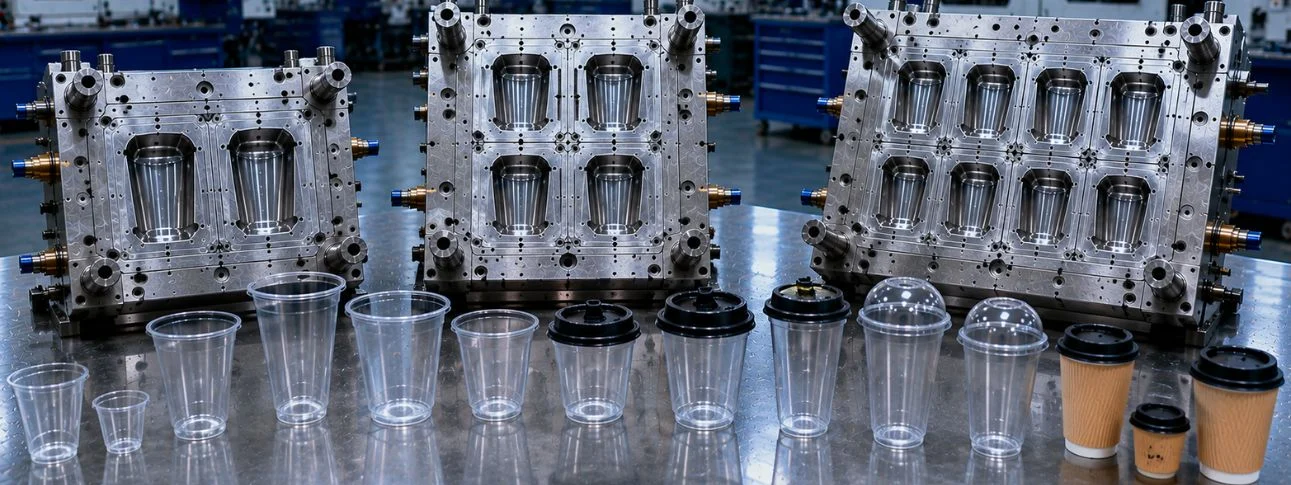
At Hitbhav Mould, we have designed and manufactured Disposable Products Moulds for clients, from small cafe chains to large food packaging exporters. In this blog, we break down the three most common materials: PP (Polypropylene), PS (Polystyrene), and PET (Polyethylene Terephthalate) so you can make a confident, informed decision before your custom plastic mould is made.
Quick Comparison: PP vs PS vs PET
Before we go deep, here is a side-by-side summary of all three materials for disposable cup moulds:
| Factor | PP (Polypropylene) | PS (Polystyrene) | PET (Polyethylene Terephthalate) |
| Best For | Hot Drinks | Cold Drinks | Premium Look |
| Heat Resistance | High | Low | Medium |
| Clarity | Translucent | Crystal Clear | Glass-Like |
| Food Safety | Excellent | Moderate | Excellent |
| Cost | Low | Lowest | Medium-High |
| Recyclable | Yes | Limited | Yes |
PP (Polypropylene) – The Go-To Material for Hot Coffee Cup Moulds
What is PP plastic?
Polypropylene (PP) is one of the most widely used plastics in the world, and for good reason. It is lightweight, flexible, chemically resistant, and most importantly for coffee cups, it can handle temperatures up to 130°C without deforming. This makes it the number one choice for Plastic Coffee Cup Moulds, where the cup will hold hot beverages.
Why PP works best for coffee glass moulds
PS (Polystyrene) – The Crystal-Clear Choice for Cold Drink Glass Moulds
What is PS plastic?
Polystyrene (PS) is best known for its exceptional optical clarity. PS cups look almost like glass, which is why it is the favourite material for cold drink glasses, juice cups, smoothie containers, and dessert cups. It is the lowest-cost option and very easy to process in a Plastic Injection Moulding Machine.
Why PS works well for cold drink glass moulds
PET (Polyethylene Terephthalate) – The Premium Look for Branded Beverage Cups
What is PET plastic?
PET (Polyethylene Terephthalate) is the plastic most commonly seen in mineral water bottles, and for good reason. It combines excellent optical clarity (even better than PS in some grades), high strength, and outstanding food safety credentials. PET cups have a premium, glass-like appearance that commands higher shelf value and is ideal for branded cafe chains and premium beverage brands.
Why is PET growing in popularity for cup moulds?
How to Choose the Right Material for Your Disposable Cup Mould
Here is a simple decision guide based on your specific product requirements:
Choose PP if:
Choose PS if:
Choose PET if:
How Hitbhav Mould Designs Moulds for PP, PS, and PET Cups
As an experienced Plastic Injection Mould Manufacturer, Hitbhav Mould has deep expertise in designing Disposable Cup Moulds for all three materials. Here is how our process adapts to each material:
Material-specific mould steel selection
The choice of mould steel varies with the plastic material. For PP and PS, standard P20 or 718H steel is sufficient for most production volumes.
Gate design and hot runner systems
PP and PET cup moulds benefit from hot runner systems with valve gates, which eliminate cold slugs, reduce material waste, and give a clean gate mark on the cup base.
Cooling channel design
Fast cycle times are critical for disposable cup moulds. We use conformal or spiral cooling channels in the mould core and cavity to achieve even cooling across the cup wall, preventing sink marks and warping while reducing cycle times to 4–8 seconds for thin-wall cup moulds.
Surface finish and texture
For PS and PET cups where clarity is critical, we polish the mould cavity to SPI A1 or A2 mirror finish. For PP cups with a matte or frosted look, we use SPI B or C texture finishes. The right surface finish on the plastic cup mould directly affects the appearance and perceived quality of your finished product.
Conclusion: Choose the Right Material, Get the Right Mould
PP is your best choice for hot coffee cups, heat-resistant, food-safe, and cost-effective. PS delivers the lowest cost and best clarity for cold drink glasses. PET offers premium clarity and recyclability for branded and export-quality cups.
The right material choice, combined with a well-designed Plastic Injection Mould, is what separates a successful disposable cup product from one that fails in the market. At Hitbhav Mould, we guide every client through this decision as part of our free DFM (Design for Manufacturability) review, so you get the right mould, made right, the first time.
Ready to start your cup mould project?