
Plastic Injection Mould: A Complete Guide for Buyers
On this page
Almost every plastic product around you, from a food container or a bucket to a toy car or an electrical box, was made in a plastic injection mould. If you are about to order your first mould, or your first mould from a new supplier, there is a lot of jargon between your product idea and a mould that runs well in your factory.
This guide explains it in plain words: what an injection mould is, how it works, the main types and parts, mould steel, design, the trial, cost and delivery time. Each section links to a detailed guide if you want to go deeper. It is written by the Hitbhav Mould team from our work designing and building moulds in Ahmedabad since 2018.
The short answer
A plastic injection mould is a precision steel tool with a hollow inside it in the shape of your part. Molten plastic is injected into that hollow, cools, and comes out as a finished part. The mould then closes and repeats the cycle, every few seconds, for as many parts as you need.
What is a plastic injection mould?
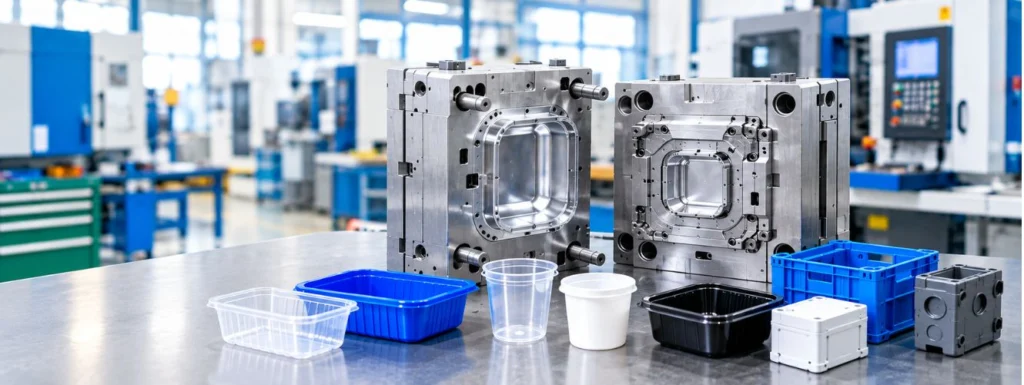
An injection mould has two halves. The cavity half forms the outside of the part and is fixed to the stationary side of the injection moulding machine. The core half forms the inside of the part and is fixed to the moving side. When the two halves close, the gap between them has exactly the shape of your part.
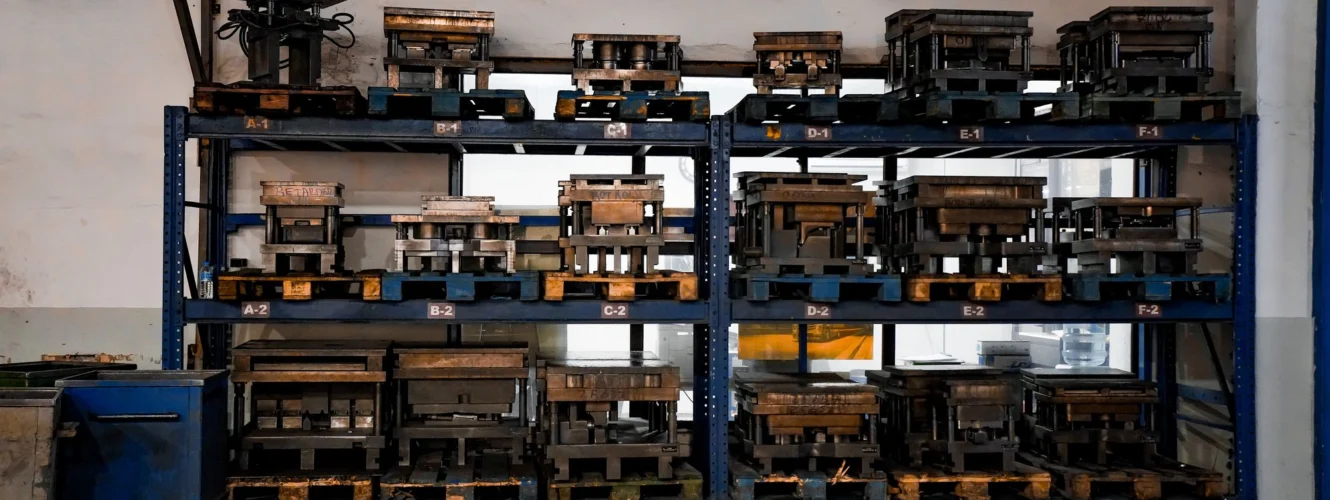
The machine and the mould do different jobs. The injection moulding machine melts the plastic, injects it and holds the mould shut. The mould decides the shape, size, surface finish and quality of every part. One machine can run many different moulds, but each mould is made for one product. That is why the mould is the part you order from a plastic injection mould manufacturer, and why its design and build quality show up in every part you sell.
How injection moulding works, step by step
Every part goes through the same cycle:
- Clamping. The machine closes the two halves of the mould and holds them shut with a clamping force measured in tonnes.
- Injection. Plastic granules are melted in the machine’s heated barrel, and a screw pushes the melt through the nozzle into the mould.
- Holding. The machine keeps pressing for a short time to pack in a little more plastic as the part starts to shrink. This prevents sink marks and short parts.
- Cooling. Water flowing through channels in the mould takes heat out of the plastic until the part is solid. Cooling is usually the longest step of the cycle.
- Opening. The moving half pulls back. The part stays on the core.
- Ejection. Ejector pins or a plate push the part off the core, and the mould closes for the next shot.
A full cycle takes from a few seconds for thin-wall cups and containers to a minute or more for large, thick parts. A mould with several cavities makes several parts in each cycle.
The main parts of an injection mould
| Part | What it does |
|---|---|
| Cavity and core | Form the outside and the inside of the part |
| Sprue bush and locating ring | Receive the machine nozzle and centre the mould on the machine |
| Runner and gate | Carry the plastic to each cavity and let it in |
| Cooling channels | Remove heat from the part and set the cycle time |
| Ejector system | Pushes the finished part off the core |
| Guide pillars and bushes | Keep the two halves aligned every time they close |
| Slides and lifters | Form side holes, undercuts and clips, and move out of the way before ejection |
| Hot runner manifold and nozzles | Keep the plastic molten up to the gate (hot runner moulds only) |
Our guide to the parts of an injection mould explains each one with what to check when you order.
Types of injection moulds
Moulds are usually described in four ways. One mould can be all of these at once, for example a 4-cavity, hot runner, thin-wall food container mould.
By the number of cavities
A single-cavity mould makes one part per cycle. It costs less and suits larger parts or smaller volumes. A multi-cavity mould makes 2, 4, 8 or more identical parts per cycle. It costs more but makes parts faster and cheaper per piece. Which one you need depends on your yearly volume and your machine; see single cavity vs multi-cavity moulds.
By construction
- Two-plate mould: the simplest construction. The runner and the parts sit in the same plane, so the gate is at the edge of the part.
- Three-plate mould: adds a runner plate, so a small pin point gate can sit anywhere on the top face, for example in the centre of a cup. The runner separates from the parts by itself when the mould opens.
- Hot runner mould: a heated manifold keeps the plastic molten up to the gate, so there is little or no runner waste and cycles are often shorter. It costs more at the start. See hot runner moulds.
The trade-offs are compared side by side in two-plate vs three-plate vs hot runner moulds.
By special features
Some products need extra features in the mould: slides or lifters for side holes and clips, unscrewing cores for threads, a thin-wall design for fast disposable packaging, or a mould built for in-mould labelling (IML), where a printed label is placed in the cavity before each shot.
By product
Mould makers often group moulds by what they make. At Hitbhav Mould these are disposable product moulds (food containers, glasses, ice cream cups, meal trays), houseware moulds (buckets, dustbins, lunch boxes, mugs), industrial moulds (crates, battery containers, switch boxes, solar boxes) and toy moulds. Each group has its own design points; disposable moulds, for example, are covered in plastic injection moulds for disposable products.
Mould steel: P20, H13, EN31 and S136
The steel decides how long the mould lasts, how well it polishes and how it copes with the plastic you run. These are the steels we use most:
| Steel | What it is | Where it is used |
|---|---|---|
| P20 | Pre-hardened mould steel, easy to machine and repair | Cores and cavities of houseware, crate and general moulds |
| H13 | Hardened hot-work steel with good wear resistance | Long runs, thin-wall moulds, gate inserts |
| EN31 | Hardened high-carbon steel with very high wear resistance | Guide pillars and bushes, wear plates, small inserts |
| S136 | Hardened stainless steel that takes a mirror polish and resists rust | Transparent and food parts, humid conditions |
More detail, including hardness and when each steel is worth the extra cost, is in mould steel: P20 vs H13 vs EN31 vs S136.
Gates and runners
The runner carries plastic from the machine nozzle to each cavity, and the gate is the small opening where it enters the part. The type and position of the gate decide where the gate mark is, where weld lines form and how evenly the part fills. Common types are edge, submarine, pin point, hot tip and valve gates. Our guide to injection mould gate types shows which one suits which product.
Which plastic will you mould?
The plastic affects the strength, look, food safety and cost of your part, and the mould is designed around it: every plastic shrinks by a different amount as it cools, and some need a harder or stainless steel.
| Plastic | Main properties | Typical moulded products |
|---|---|---|
| PP (polypropylene) | Light, tough, food-safe grades, handles heat | Food containers, IML containers, buckets, lunch boxes, crates |
| PS (polystyrene) | Rigid, easy to mould, low cost | Disposable glasses, ice cream cups, cold-use packaging |
| PET | Clear and strong | Clear glasses and containers |
| HDPE | Tough, resists chemicals | Containers, dustbins, industrial parts |
| ABS | Impact resistant, glossy, takes colour well | Toys, tool box parts, electrical housings |
| PC (polycarbonate) | Very strong, heat resistant | Electrical boxes such as ACDB/DCDB solar boxes |
For disposable packaging, see PP vs PS vs PET and food-grade plastic moulds.
Mould design, DFM and Moldflow
Most problems with a mould can be avoided before any steel is cut. A good mould maker does three things first:
- DFM review (design for manufacturability): checks your part for uneven walls, missing draft, thick ribs, undercuts and a poor gate position, and suggests changes.
- 3D mould design: the complete mould in CAD, with cavities, runner, cooling, ejection and steel, sized to fit your machine.
- Moldflow simulation: shows how the plastic will fill and cool, where weld lines and air traps form and where the part may warp.
You should see and approve the design before machining starts. At Hitbhav Mould the DFM review is free with every quote; see how we work on plastic mould design and DFM review, and check your own drawing against our plastic part design guidelines.
How a mould is made
After design approval, the steel is machined on CNC machines, and fine details, sharp corners and ribs are made by EDM (spark erosion). Inserts that need it are hardened, then the cavity and core are polished or textured to the finish you want; see injection mould surface finish. The mould is then assembled, with its cooling and ejection checked, and trialled. Our mould making process shows each stage, and how plastic food container moulds are made follows one mould from start to finish.
The mould trial: see it working before dispatch
The first run of a new mould on a moulding machine is called the trial, or T1. It shows whether the mould fills, cools and ejects as designed, and gives you the first real parts to check against your drawing: dimensions, finish, weight, fit with other parts and any defects.
Ask for a trial before the mould leaves the maker’s factory. At Hitbhav Mould every mould is trialled before dispatch, and you receive videos and photos of the trial and the moulded parts. If a trial part shows short shots, flash, sink marks or warpage, our guide to injection moulding defects explains which ones start in the mould and which in the machine settings.
How much does a plastic injection mould cost?
Every mould is made to order, so there is no fixed price list. At Hitbhav Mould, prices start from ₹80,000. The final price depends mainly on:
- the size of the part, which sets the size of the mould and the amount of steel;
- the number of cavities;
- the steel grade;
- cold runner or hot runner;
- slides, lifters or unscrewing cores for side holes and threads;
- the surface finish, such as a mirror polish or a texture.
A worked explanation is in plastic injection mould cost in India, with a separate guide to food container mould cost. For the HSN code and GST on your invoice, see HSN code and GST rate for plastic injection moulds.
How long does it take to make a mould?
At Hitbhav Mould, delivery is usually about 25 days, depending on the mould. Bigger moulds, more cavities, hot runners and moulds with many slides take longer. Changes to the part after the design is approved add time, which is one more reason to settle the design first. The delivery date is agreed in your quote.
How long does a mould last?
A mould’s life depends on the steel, the plastic (glass-filled and other abrasive plastics wear steel faster), the number of shots and how well it is looked after. Simple care makes a big difference: clean the vents and parting line, keep the cooling water clean, protect the steel from rust when the mould is stored, and replace worn pins and bushes early. See how long a plastic injection mould lasts.
How to choose a mould maker
Before you place an order, ask each mould maker:
- Do you design the mould in-house, review the part (DFM) and share the 3D design for approval?
- Is the machining (CNC and EDM) done in your own factory?
- Which steel will you use for the core, cavity and inserts, and is it written in the quote?
- Have you made moulds for products like mine?
- Will you trial the mould before dispatch and send me the trial parts, videos or photos?
- What is the delivery date, and what happens if the design changes?
Our longer checklist is in how to choose the right plastic injection mould manufacturer.
What to send for a quote
- A drawing (2D or 3D), a sample, or photos with the main sizes
- The plastic material
- How many parts you plan to make in a year
- The number of cavities you have in mind, if you know it
- Your injection moulding machine (clamping force and size)
Send it through our enquiry form. Buying from outside India? See export orders.
Frequently asked questions
Is a plastic die the same as a plastic mould?
In everyday use in India, yes: buyers often say “plastic die” for an injection mould, and a die and mould manufacturer may make both. Strictly, “die” is used for press tools that cut or form sheet metal, for extrusion and for die casting, while the tool that shapes injection-moulded plastic is a mould.
What is the difference between injection moulding and an injection mould?
Injection moulding is the process of making plastic parts. The injection mould is the steel tool used in that process, and it is made by a mould maker.
Can a mould be made from a sample instead of a drawing?
Yes. A mould maker can measure a sample, model the part in 3D and design the mould from it. Tell them the plastic and which sizes matter most.
How many parts can one mould make?
It depends on the steel, the plastic, the part design and the maintenance. A hardened, well-maintained mould lasts far longer than a pre-hardened one running an abrasive plastic. Tell your mould maker how many parts you expect to make over the life of the product, so the steel can be chosen to match.
Should I choose a single-cavity or a multi-cavity mould?
Choose by volume. If you need a few thousand parts a month, a single-cavity mould is usually enough. If you need hundreds of thousands, more cavities lower the cost per part, as long as your machine has the clamping force and shot size for them.
Planning a new mould?
Hitbhav Mould designs and builds plastic injection moulds in Kathwada GIDC, Ahmedabad, for disposable, houseware, industrial and toy products. Send us your drawing or sample through the enquiry form or on WhatsApp at +91 99258 10161. We review the part, suggest the mould, share the 3D design for your approval and trial the mould before dispatch.
Planning a mould?
Send your drawing, sample or photos. Every mould is made to order and trialled before dispatch.

We design and make plastic injection moulds in Kathwada GIDC, Ahmedabad: 8+ years in business, steel moulds (P20, H13, EN31, S136), every mould trialled before dispatch. About us · Our process
Related guides
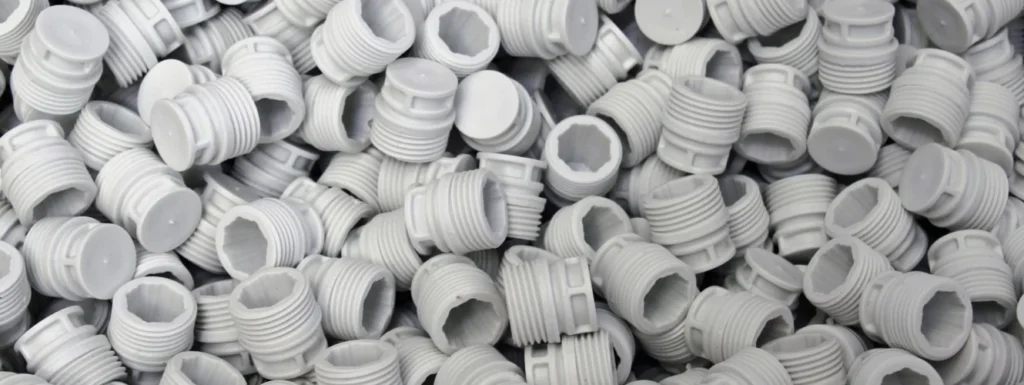
Injection Moulding Defects: Causes, Fixes and Which Ones Start in the Mould
What causes short shots, flash, sink marks, warpage, weld lines and burn marks, how to fix them at the machine, and when the fix has to…

Food-Grade Plastic Moulds in India: Material and Safety Basics
Short answer: "food-grade" mostly describes the plastic and the finished container, not the steel mould. A good food-grade mould is one that is built, finished and…
How to Choose the Right Plastic Injection Mould Manufacturer for Your Product
IntroductionPicking a Plastic Injection Mould Manufacturer is one of the biggest decisions for any business that uses Plastic Injection Moulding. The quality of the mould directly…